
Commercial and industrial facilities often have HVAC requirements that standard equipment cannot meet efficiently.
The facility may need high airflow, specialized filtration, precise pressure control, unusual heating capacity, or equipment that fits a restricted installation area. Using a standard air handling unit in these conditions can lead to field modifications, excessive fan energy, poor airflow, and difficult maintenance.
A custom air handling unit addresses these issues by matching the equipment to the actual application.
What Makes an Air Handling Unit Energy Efficient?
Energy efficiency depends on more than the efficiency rating of one component. The fan, motor, filters, coils, dampers, casing, controls, and ductwork must work together.
An efficient air handling unit should:
- Deliver the required airflow
- Overcome the actual system pressure
- Respond to changing operating conditions
- Limit air and heat loss
- Recover energy when practical
- Provide access for maintenance
- Meet the facility’s ventilation and process requirements
Custom design gives engineers more control over these factors. However, custom equipment is not automatically efficient. Its performance still depends on accurate design information, proper installation, commissioning, and maintenance.
1. Match Airflow to the Application
Every facility has different airflow requirements.
An industrial production area may require high volumes of outdoor air. A healthcare or pharmaceutical facility may need controlled pressure relationships and specialized filtration. A data center may have high cooling and airflow demands.
Selecting a unit without understanding these requirements can create problems.
An undersized unit may struggle to maintain the required conditions. An oversized unit may use larger fans and motors than the application needs or operate inefficiently during lower-demand periods.
A custom AHU can be engineered around factors such as:
- Required cubic feet per minute
- Outdoor and return-air volumes
- Heating and cooling loads
- Filtration requirements
- Space pressure requirements
- Operating schedules
- Process exhaust
- Future capacity needs
This helps the project team select equipment based on actual demand rather than adapting a standard unit after installation.
2. Account for Static Pressure
The fan must overcome resistance throughout the HVAC system.
Filters, coils, dampers, energy recovery sections, ductwork, and other components all create pressure loss. If the design underestimates this resistance, the system may not deliver enough air. If it overestimates resistance, the project may use more fan capacity than necessary.
Custom engineering allows the fan and motor to be selected around the expected operating point.
This is especially important in facilities with:
- Long or complex duct runs
- High-efficiency filters
- Multiple coils or treatment sections
- High-pressure production areas
- Large outdoor-air requirements
- High-CFM applications
The goal is not to install the largest available fan. It is to deliver the required airflow at the required pressure without unnecessary energy use.
3. Adjust Airflow as Demand Changes
Many facilities do not need full airflow at all times.
Demand may change based on occupancy, production schedules, outdoor conditions, equipment loads, or exhaust requirements. Operating continuously at maximum airflow can waste energy when the facility needs less air.
A custom AHU can be designed to support variable-speed fans and project-specific control sequences. The system can then adjust its output when operating conditions change.
Variable operation must be planned carefully. Reducing airflow should not compromise:
- Required ventilation
- Building pressure
- Process conditions
- Temperature control
- Humidity control
- Filtration performance
Controls should respond to the facility’s needs rather than reducing fan speed without considering the rest of the system.
4. Recover Energy From Exhaust Air
Facilities that exhaust conditioned air must replace it with outdoor air.
During cold weather, the HVAC system must heat the incoming air. During warmer and more humid conditions, the system may need to cool and dehumidify it. This creates a substantial load in facilities with high outdoor-air or exhaust requirements.
Energy recovery equipment can transfer usable heat between the outgoing and incoming air streams. This reduces the amount of heating or cooling needed to condition the replacement air.
Energy recovery may be useful in:
- Manufacturing facilities
- Healthcare buildings
- Laboratories
- Food and beverage facilities
- Educational buildings
- Other high-ventilation applications
It is not appropriate for every exhaust stream. The project team must consider contaminants, moisture, air separation requirements, operating hours, and maintenance before selecting a recovery method.
5. Reduce Leakage and Thermal Loss
Air leakage can reduce the amount of conditioned air that reaches the facility. It can also allow untreated air to enter the unit.
Casing design should reflect the unit’s operating pressure, installation location, temperature range, and environmental exposure. Depending on the application, the design may require:
- Insulated panels
- Sealed access doors
- Thermal breaks
- Weather-resistant construction
- Corrosion-resistant materials
- Properly sealed penetrations
These features help protect internal components while limiting avoidable air and heat loss.
6. Make Maintenance Easier
Equipment cannot maintain its original performance when filters become clogged, coils become dirty, dampers stop working, or sensors lose calibration.
Poor service access makes these problems harder to find and correct.
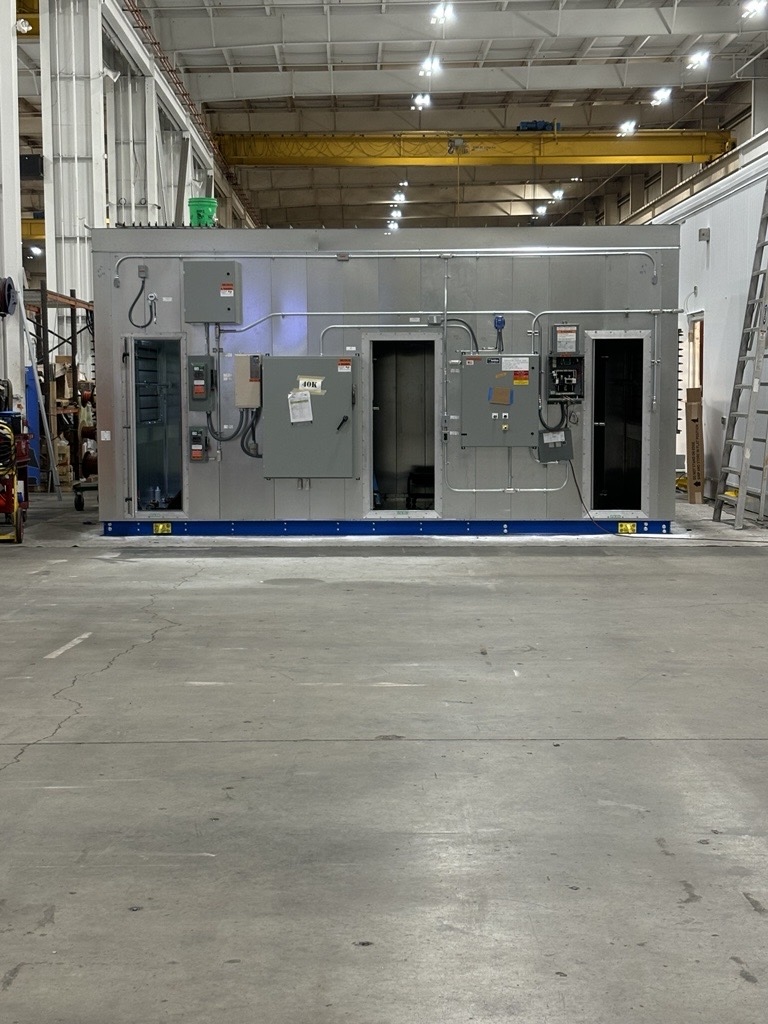
A custom AHU can provide access around the components technicians need to inspect, clean, repair, or replace. This may include access doors, removable panels, service clearances, filter access, lighting, and component layouts that support safe maintenance.
Maintenance-friendly design helps facility teams address problems before they affect airflow, energy use, or reliability.
Should You Retrofit or Replace an Existing AHU?
A complete replacement is not always necessary.
An AHU retrofit may be practical when the existing structure remains serviceable but certain components have become inefficient, damaged, or obsolete.
A retrofit may involve:
- Replacing fans or motors
- Updating filters
- Repairing panels and doors
- Improving seals or insulation
- Replacing coils
- Adding new control components
- Reconfiguring internal sections
- Improving service access
Before choosing a retrofit, inspect the unit’s casing, structure, components, controls, and remaining service life. The cost and complexity of modifying the existing unit should be compared with replacement.
Information Needed Before Designing a Custom AHU
A project team should provide clear operating information before equipment design begins.
Useful information includes:
- Required airflow
- External static pressure
- Outdoor and return-air conditions
- Heating and cooling requirements
- Filtration levels
- Fuel and power availability
- Installation location
- Available footprint
- Delivery and rigging restrictions
- Maintenance clearances
- Facility operating hours
- Future expansion plans
Accurate information helps reduce design changes and ensures the final unit matches the application.
Custom Air Handling Solutions From Flex Air
Flex Air designs and manufactures custom air handling units for commercial and industrial applications.
Available capabilities include indoor and outdoor construction, high-CFM and high-static applications, direct- and indirect-fired gas heating, energy recovery, integrated piping, AHU retrofits, factory testing, and support for knockdown installations.
When standard equipment creates performance, space, installation, or maintenance compromises, Flex Air can develop an air handling solution around the facility’s actual requirements.
Contact Flex Air to discuss your custom air handling unit or retrofit project.