
Commercial air handlers are a core part of many commercial and industrial HVAC systems. They move air, filter it, heat it, cool it, manage humidity, and help support indoor air quality.
For simple buildings, an off-the-shelf air handler may work well. A small office, retail space, or basic commercial property may not need a custom solution. But many facilities are not that simple.
Some buildings have tight mechanical rooms. Some need high CFM or high static pressure. Others need better humidity control, special filtration, energy recovery, direct or indirect fired gas heating, or retrofit support. In these cases, forcing a standard air handler into the project can create performance, installation, and maintenance problems.
That is when a custom commercial air handler can be the better choice.
What Is a Commercial Air Handler?
A commercial air handler, also called an AHU, is an HVAC unit that conditions and moves air through a building. Depending on the application, it usually include fans, filters, coils, dampers, heating sections, cooling sections, humidity control components, energy recovery sections, controls, and service access doors.
In simple terms, the air handler prepares the air before it moves through ductwork and reaches the occupied or process areas of a building.
A commercial air handler can help:
- Move air through the HVAC system
- Filter airborne particles
- Heat or cool the air
- Control humidity
- Bring in outdoor air for ventilation
- Support comfort and indoor air quality
In industrial and commercial facilities, the air handler may also support production spaces, equipment rooms, clean areas, storage environments, and other specialized applications.
Standard vs. Custom Commercial Air Handlers
Before choosing an air handler, it helps to understand the difference between a standard unit and a custom unit.
An off-the-shelf air handler is built around pre-designed sizes, layouts, and component options. It is usually a good fit when the building has common HVAC needs and enough space for standard equipment.
A custom commercial air handler is designed around the project’s actual requirements. The unit can be built around the required airflow, available footprint, filtration needs, heating method, cooling needs, casing construction, controls, access requirements, and installation conditions.
Flex Air provides custom commercial and industrial air handling units, including indoor and outdoor construction, AHU retrofits, knockdown installation services, direct and indirect fired gas heating, high CFM direct-fired units, and energy recovery solutions.
When Off-the-Shelf Air Handlers Make Sense
Custom equipment is not always necessary. A standard air handler may be the right choice when the project is simple.
An off-the-shelf unit can work well when:
- The building has a standard layout
- The airflow requirements are common
- Basic comfort heating and cooling are enough
- Filtration needs are not specialized
- The installation path is simple
- There is enough room for standard equipment
- Upfront budget is the main concern
For example, a small office or retail building may not need advanced humidity control, high static pressure, energy recovery, or special installation support. If the catalog unit fits the space and meets the performance needs, it can be a practical option.
However, the first cost should not be the only factor. If a standard air handler needs major field modifications or creates maintenance problems, it may cost more over time.
When Custom Commercial Air Handlers Are the Better Choice
Custom air handlers become valuable when the project has requirements that standard equipment cannot easily meet.
The Building Has Space Constraints
Space is one of the most common reasons to choose custom. Many retrofit projects, older buildings, and industrial facilities have crowded mechanical rooms or limited roof space.
A standard unit may be too long, too wide, too tall, or difficult to access. It may also require changes to ductwork, piping, roof openings, or structural supports.
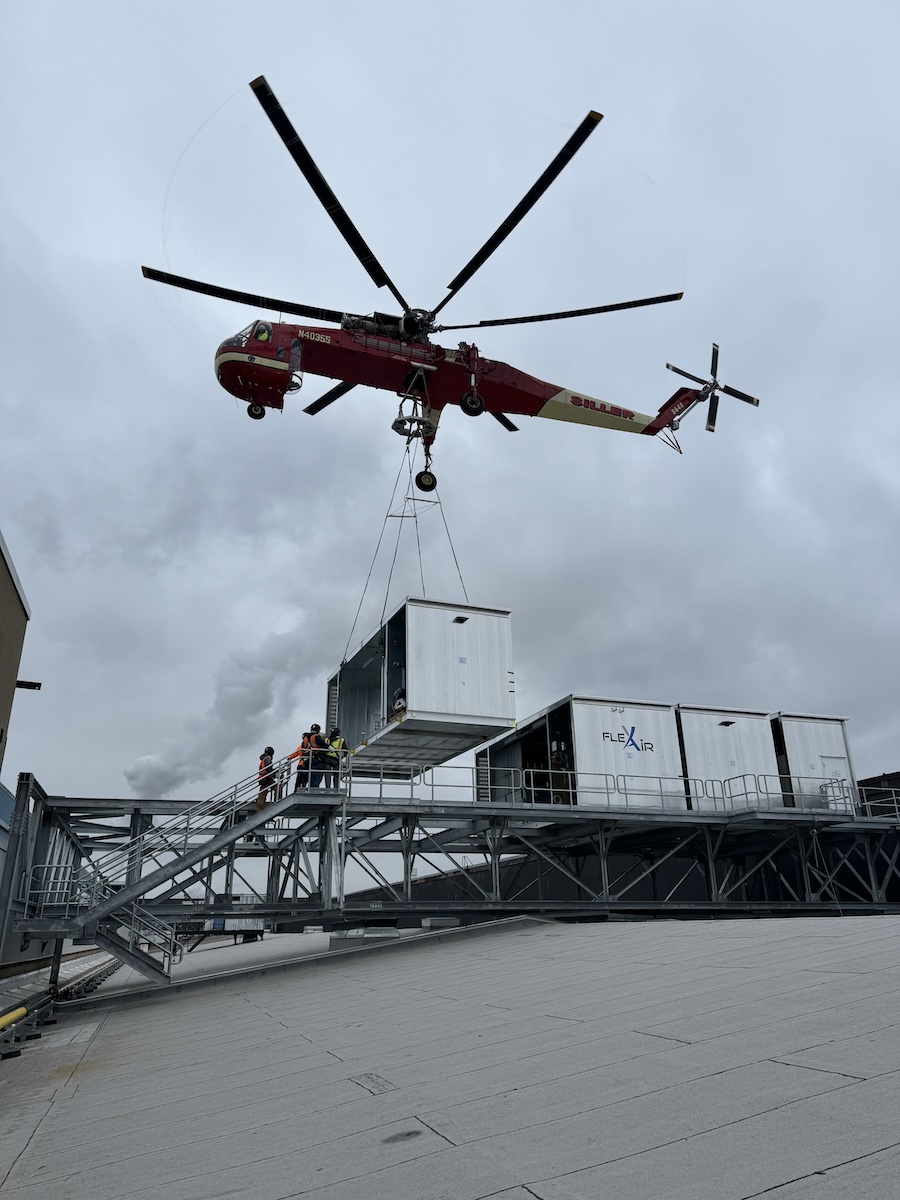
A custom air handler can be designed around the available space instead of forcing the building to adapt to the equipment.
The Project Needs High CFM or High Static Pressure
Some buildings need more airflow capacity than a standard commercial application. Others have long duct runs, complex distribution, or pressure requirements that create high static conditions.
Flex Air lists custom-constructed units for high-temperature and high-static applications, along with high CFM direct-fired units. This makes custom design a strong option for demanding commercial and industrial projects.
The Facility Needs Special Heating Options
Not every project uses the same heating method. Some commercial and industrial applications may need direct-fired or indirect-fired gas heating.
A custom AHU can be designed around the heating approach that fits the application, airflow requirements, available utilities, and operating conditions.
Flex Air’s custom large air handling unit capabilities include direct and indirect fired gas heating, as well as high CFM direct-fired units with factory-mounted and piped gas trains.
Humidity Control Matters
Humidity can affect comfort, indoor air quality, equipment, products, and building materials.
Too much moisture can lead to condensation and comfort issues. Too little humidity can also create problems in certain facilities. This is especially important in healthcare, food and beverage, pharmaceutical, data center, higher education, storage, and manufacturing environments.
A custom air handler can be designed with humidity control in mind from the beginning.
The Application Needs Better Filtration
A basic commercial space may only need standard filtration. But some facilities need more careful air quality planning.
Healthcare, pharmaceutical, food and beverage, aerospace, data center, and industrial environments may require application-specific filtration and access design.
A custom AHU can be designed with the right filter sections, service access, casing construction, and monitoring options based on the project’s engineering requirements.
The Project Is a Retrofit
Retrofit projects often involve older buildings, limited access, existing ductwork, and tight mechanical spaces. In some cases, a fully assembled standard unit may not be practical.
Flex Air lists AHU retrofits and factory onsite services for knockdown installation among its capabilities. This can be helpful when access is limited or when the project requires a more flexible installation approach.
Energy Recovery Is Important
Energy recovery can help improve HVAC efficiency by capturing energy from exhaust or return air and using it to precondition incoming outdoor air.
This can be useful in facilities with high ventilation needs. Flex Air includes energy recovery solutions as part of its custom large air handling unit capabilities.
Maintenance Access Is a Priority
Maintenance access matters for the full life of the equipment. If filters, coils, fans, or drain pans are hard to reach, routine service becomes harder and more expensive.
A custom air handler can be designed with better access doors, filter sections, coil access, fan access, and service areas. This can make maintenance more practical for facility teams.
Industries Where Custom AHUs Often Make Sense
Custom air handlers are useful when airflow, temperature, humidity, installation, or reliability requirements are more complex than a basic comfort application.
Flex Air serves applications across industries such as:
- Industrial and automotive
- Commercial
- Data center
- Food and beverage
- Healthcare
- Higher education
- Pharmaceutical
- Aerospace
Each of these environments can have different air handling needs. For example, a data center may focus on cooling and reliability. A food and beverage facility may need temperature, moisture, and air quality control. A retrofit project in higher education may need a unit that fits an older building with limited access.
This is why custom design can be valuable. It allows the equipment to be built around the project instead of forcing the project to accept a standard configuration.
Key Factors to Consider Before Choosing an AHU
Choosing the right commercial air handler requires more than comparing unit prices. The project team should consider the full application.
Important factors include:
- Required airflow
- Static pressure
- Heating and cooling loads
- Filtration needs
- Humidity control
- Indoor or outdoor installation
- Energy recovery requirements
- Cabinet construction
- Service access
- Controls integration
- Installation method
- Future facility needs
If these requirements are simple, a standard air handler may work. If several of them are complex, custom may be the better fit.
Why Custom Can Be Worth the Higher Upfront Cost
A custom air handler may cost more upfront than a standard unit. But the lowest first cost is not always the best long-term value.
A custom AHU can help reduce field modifications, improve equipment fit, support better performance, and make maintenance easier. It can also help the system match the building’s actual operating conditions.
This is especially important in commercial and industrial facilities where downtime, poor airflow, humidity issues, or difficult maintenance can create bigger problems later.
Common Mistakes to Avoid
When choosing a commercial air handler, avoid these mistakes:
Choosing Only Based on Price
A lower-cost unit may not be cheaper over time if it creates installation, performance, or maintenance issues.
Ignoring the Installation Path
Always consider how the unit will be delivered, rigged, placed, connected, and serviced.
Overlooking Maintenance Access
A unit that is difficult to service can become a long-term problem.
Using Standard Equipment for a Non-Standard Application
If the project has unusual airflow, space, filtration, humidity, or heating requirements, a standard unit may force too many compromises.
Conclusion
Commercial air handlers are essential to building comfort, ventilation, indoor air quality, and HVAC performance. Standard units work well for many simple applications. But when a project has tight space, high CFM, high static pressure, retrofit challenges, special heating needs, humidity concerns, filtration requirements, or energy recovery goals, custom often makes more sense.
At Flex Air, we understand that commercial and industrial HVAC projects are rarely one-size-fits-all. Flex Air was established in 2015 as a division of Miller Industries, LLC, to support the industrial and commercial market demand for modular manufacturing and custom HVAC solutions. Our headquarters and manufacturing facilities are located in Fenton, Michigan, at the Miller Industries building.
Our team provides custom commercial and industrial air handling units, indoor and outdoor construction, conceptual design capabilities, AHU retrofits, knockdown installation support, direct and indirect fired gas heating, high CFM direct-fired units, and energy recovery solutions.
When standard equipment creates too many compromises, Flex Air can help project teams move toward a custom air handling solution designed around the real needs of the facility.